202-269-9441 info@dcfapac.org
Toni’s Adoption Story

Toni’s Adoption Story

Adopting From Foster Care

“I just wanted to be an adoptive mom and help children enjoy their childhood.”
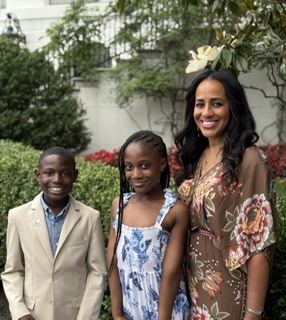
Toni’s journey began when she recognized the tremendous need for loving, stable homes for children in her community. Motivated to make a difference, she became a licensed DC foster parent. While the licensing process prepared her for the technical aspects of foster parenting, Toni sought practical guidance from people with firsthand experience navigating the foster care system.

That search led her to the Foster and Adoptive Parent Advocacy Center (FAPAC), where she found exactly what she needed. Through trainings, support groups, and networking opportunities, Toni connected with a community of foster and adoptive parents who provided encouragement, advice, and real-life insight.

“Talking with other foster parents gave me the knowledge and understanding that better prepared me for my first placement,” Toni recalls.

Very soon afterward, twin infants – a boy and a girl – were placed in her care. Like all children entering foster care, the twins’ initial permanency goal was reunification with their birth family. Foster care is intended to provide a safe and stable home for children while parents receive services and support to address the circumstances that led to the child’s removal. Whenever possible, child welfare agencies work toward safely reunifying children with their families.

However, when reunification is not possible, or no longer in the child’s best interest, the court may determine that adoption is the most appropriate permanency option. In those cases, children will become legally available for adoption, allowing them to achieve the stability, permanence, and lifelong family connections every child deserves.

For Toni, what began as a temporary foster care placement eventually became a forever family through adoption.

Today, approximately 550 children are in foster care in the District of Columbia. While the majority will reunify with relatives or birth parents, some children will ultimately become available for adoption when a permanent family cannot be achieved through reunification or kinship care. Each year, between 30 and 60 children are adopted from DC foster care, creating life-changing opportunities for both children and adoptive families.

“Without the knowledge, guidance, and care FAPAC provided, I would have given up because I thought I didn’t have what it takes. And knowing that the child welfare agency continues to support me is a blessing.” Toni says.

“Being a single mom to now pre-teen twins is a lot of work, but it is also incredibly rewarding. That’s why I’m passionate about helping other parents adopt through foster care.”

Her personal journey from foster parent to adoptive mother gives her a unique perspective that inspires and encourages prospective foster and adoptive parents throughout the District.

If you are interested in adopting from foster care, the first step is becoming a licensed DC foster parent. Your journey may begin with providing temporary care, but as Toni’s story demonstrates, it could also lead to creating a forever family.

Spotlight on Isabella Sison

Spotlight on Isabella Sison

We asked Isabella a few questions to get to know her better.

What is your title at FAPAC and what will you be doing?

My title is Community Engagement Coordinator. My role includes managing volunteers, building connections with partner organizations, and representing FAPAC in the community. I help the team maintain our databases and organize other programs.

What did you do before FAPAC?

Last year, I received my undergraduate degree from William & Mary in Virginia. After graduation, I worked in a technical support role for a nonprofit organization in Boston. Following this position, I wanted to find a role in the DC area where I could apply my communicative and analytical skills towards a cause I cared about, and this role at FAPAC fits perfectly.

What do you hope to contribute to the DC foster care system?

I plan to contribute my energy, technical skills, and new ideas to the DC foster care system. I’m passionate about the opportunity to help DC families in the system, as well as helping other families to reduce the need for foster care involvement. My skillset and desire to make a difference will help me collaborate with other foster care advocacy workers to continue ongoing supportive programs and create new solutions.

What motivates you?

The two things that motivate me most are my love of learning and my desire to help others. I have always been passionate about seeking new knowledge and experiences, whether that be through formal education, personal exploration, or professional development. Additionally, helping others is a main motivation of mine, and I’ve found great fulfillment and joy through volunteering and contributing to meaningful nonprofit work.

What do you do for fun?

I love spending time with family and friends, especially playing board games. On my own, I enjoy reading, cooking, studying languages, and exploring new places.

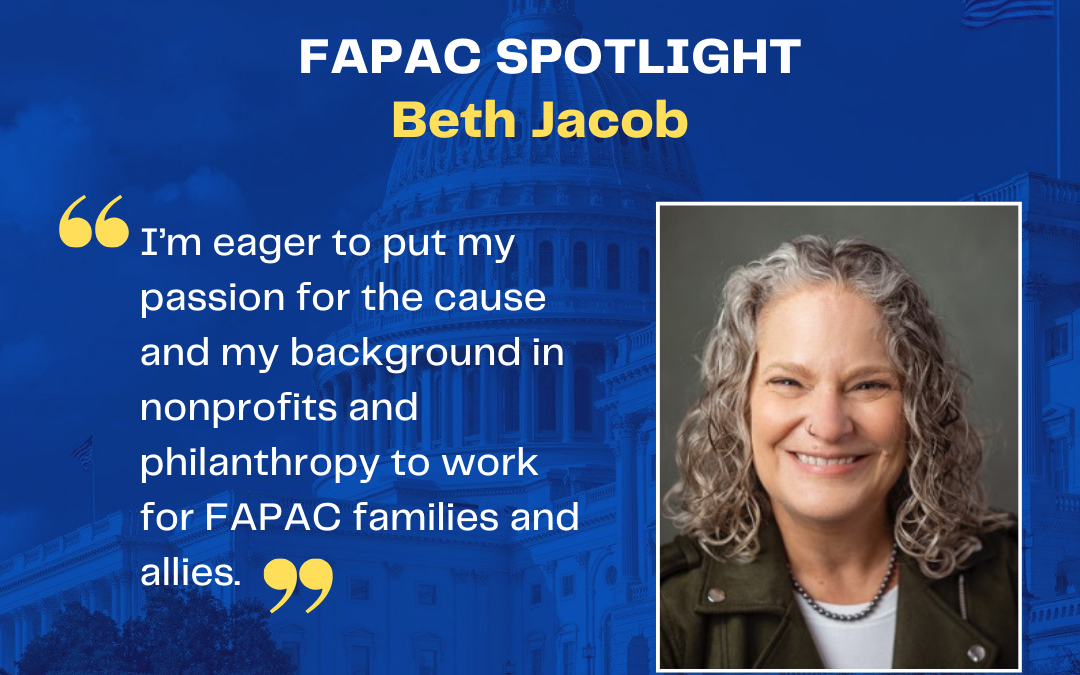
Spotlight – Beth Jacob

Spotlight – Beth Jacob

We asked Beth Jacob a few questions to get to know her better.

What drew you to FAPAC?

I was drawn to FAPAC out of the desire to give back to my DC community. A District resident since 2005, I have spent my career in and around advocacy for children and families, and feel FAPAC is meeting a critical need for supporting folks in our city–especially for young people transitioning out of foster care. In my short time working with FAPAC, I’ve been deeply impressed by how the organization helps families navigate complex systems to ensure kids and their caregivers can flourish and thrive.

What other work are you involved in outside of FAPAC?

Outside of FAPAC, I am Director of Development and Communications for a small but mighty nonprofit called Governing for Impact. A creative writer by training, today I help my organization raise funds and build partnerships for its efforts advancing a federal government that works on behalf of the common good. When I’m not working, I’m a busy mom of two teenagers, two cats, and a small, fluffy dog.

What are you looking forward to the most as a board member?

Being of service! I’m eager to put my passion for the cause and my background in nonprofits and philanthropy to work for FAPAC families and allies.

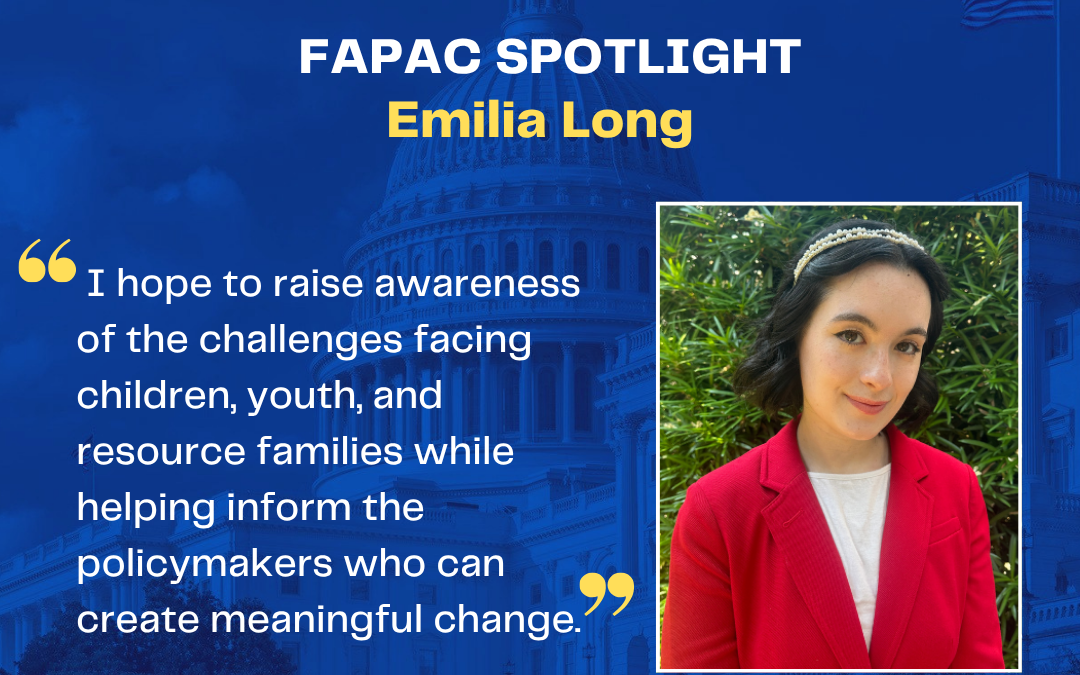
Spotlight on Emilia Long

Spotlight on Emilia Long

We asked Emilia a few questions to get to know her better.

What is your title at FAPAC and what will you be doing? 

As Policy Coordinator with FAPAC, I conduct research and develop policy-focused learning opportunities for foster parents and youth in the District. I also support FAPAC’s federal and District-level advocacy priorities through policy research, report writing, and the development of resources that help families better understand and engage with the systems that affect them.

What did you do before FAPAC? 

Before joining FAPAC, I held several internship positions in both D.C. and California. With a particular interest in family law and access to justice, I gained experience working with self-represented litigants in the California Courts system, as well as working with families at a private law firm in D.C. As a Government student, I also interned with the U.S. House Committee on Rules, where I gained firsthand experience with the legislative process and how policy decisions are shaped at the federal level.

What do you hope to contribute to the DC foster care system?

The D.C. foster care system is shaped by both federal and local policy priorities, and I hope to contribute by helping make those policies more accessible for the families they affect. Through research, education, and advocacy, I hope to raise awareness of the challenges facing children, youth, and resource families while helping inform the policymakers who can create meaningful change.

What motivates you?

I am motivated by the ability of policy to create lasting change in people’s lives. I am particularly passionate about making systems more accessible and responsive to the needs of working-class families. My experiences in government, the courts, and child welfare have strengthened my commitment to this work, and I am excited to continue establishing a career focused on this
central goal.

What do you do for fun?

In my free time, I love to travel, explore new restaurants, and cook!


Spotlight on Taylor Woodman

Spotlight on Taylor Woodman

We asked Board Member Taylor Woodman a few questions to get to know him better.

How did you get involved with FAPAC?

During my first year of fostering, my partner and I were trying to navigate the complexities of our first placement and in need of support and resources. FAPAC proved to be the guiding light that we needed. FAPAC helped us understand the various systems and stakeholders at play and what resources and action steps were within our realm. FAPAC served, not only as a rich knowledge source for us, but also as a way for us to better understand our role and center the child in our home. With FAPAC’s support, we were able to enter into a strong shared parenting model, navigate reunification, and redefine and expand our notion of family. 

What other work are you involved in outside of FAPAC?

Outside of FAPAC, I am very active in the resource parent community. This takes many forms from continuing to serve foster youth, serving on the Family Court’s Court Improvement Program, supporting CFSA with engaging new and current resource parents. I’ve also served as a mentor for former foster youth on my university campus, where I serve as a faculty member and within the administration. 

How has being a foster and adoptive parent shaped your board experience?

I’ve always approached serving as a resource, and now adoptive parent, as a learning process. Five years into the role as a resource parent, I realize there is still lots to learn, but I have also had various experiences navigating the child welfare system and the legal and social support services that surround it.  These experiences inform what I see as central needs for the foster and adoptive community and will guide my voice and my approach to the strategic direction of FAPAC’s mission and programming efforts.

What impact do you hope to bring to the FAPAC community?

In 2024, my partner and I were named DC’s Foster Parents of the Year. This brought a lot of light to fostering within our community and larger networks. Many people were curious at how they can support kids and families but did not know where to start. I am hoping to serve as that connector and harness this energy for support to help make a greater impact at FAPAC.